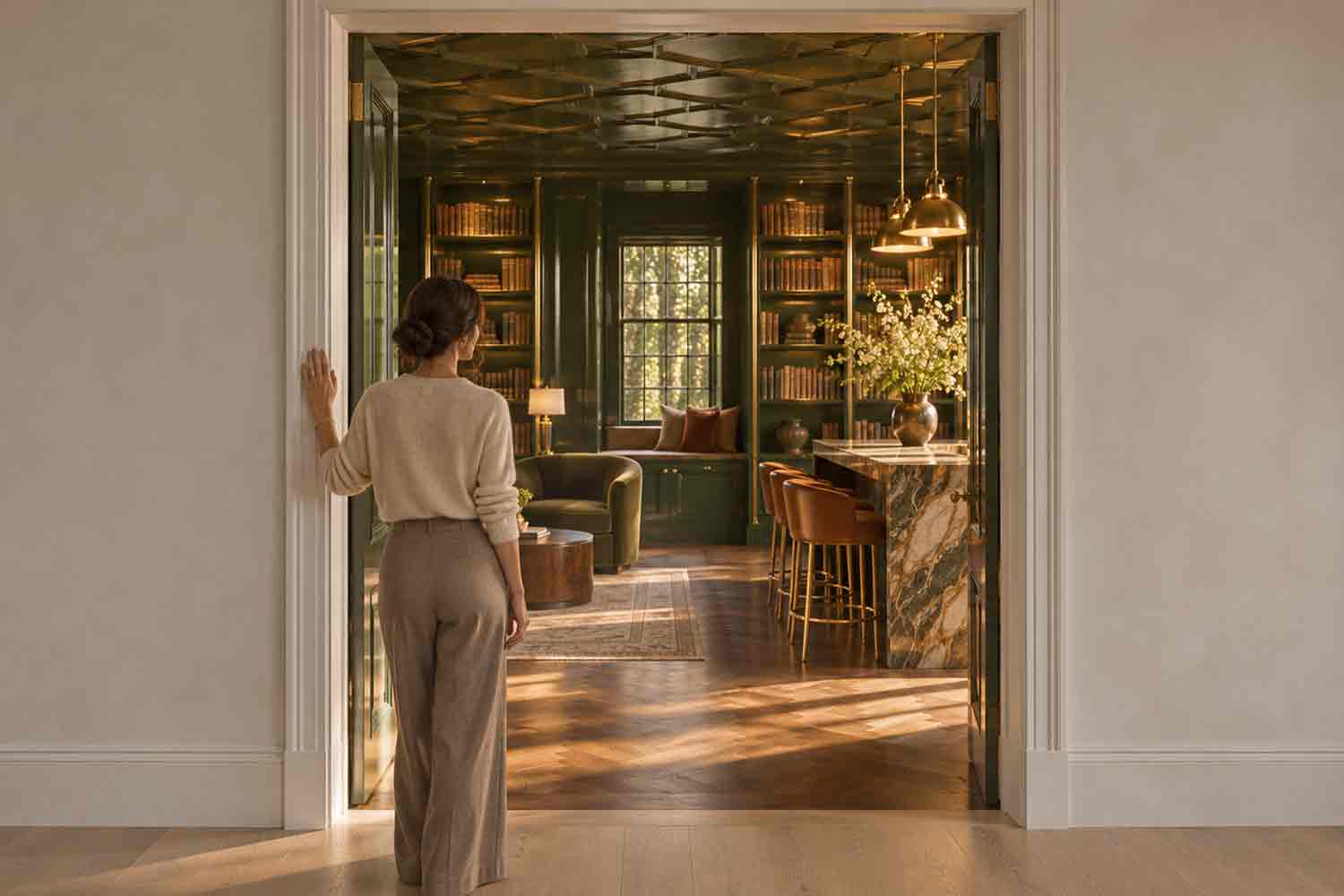
When Does a Custom Luxury Home Become Too Custom?
11/19/2026
In luxury real estate, customization is part of the appeal. Affluent owners have the means to shape a home around how they live, entertain, work and unwind, and the best of those decisions make a property more desirable for years.
But some personalization quietly narrows the market. The line between a home that feels distinctive and one that feels like someone else's project is thinner than many owners realize, and it usually comes down to one question: what would it cost the next owner to make the home their own?
That question doesn't make personal taste the problem. It gives agents a practical way to help clients see which choices are likely to hold their value and which may become a negotiating point later.
What Owners Spend Isn't What Buyers Pay For
Owners tend to remember what an improvement cost. Buyers judge what it's worth to them.
The gap can be wide even for mainstream projects. In the 2025 Cost vs. Value Report, an upscale major kitchen remodel recouped an estimated 35.7% of its cost at resale on national averages. An upscale bath remodel recouped 41.7%, and an upscale primary suite addition just 18%. Those are standardized projects with broad appeal, and national averages won't reflect every luxury market. Still, if well-planned upgrades recover well under half their cost, a highly personal project has little reason to do better.
Buyers also subtract something the invoice never shows: the cost to undo. Facing a themed room, an unusual layout or a dramatic finish they wouldn't have chosen, they weigh the price of changing it, the months of disruption and the uncertainty of not knowing what's behind the walls. A buyer who can't estimate that cost will often assume it's high.
The Real Test Is Reversibility
A more useful way to judge customization is to ask how deep it goes. In How Buildings Learn, Stewart Brand describes buildings as layers that change at different speeds: furnishings shift often, interior layouts occasionally and structure rarely. Personalization works the same way.
The surface. Paint, wallcoverings, lighting fixtures, hardware, window treatments and furnishings. These carry a great deal of personality and are relatively simple to change. Bold choices here are low-risk.
The built-ins. Custom millwork, cabinetry, stone, tile and the fixed fit-out of specialty rooms, such as tiered theater seating, wine-room racking and cooling, or a fitness studio's flooring and mirrored walls. These cost more to replace, but exceptional materials and good proportions can carry them even when the style isn't a buyer's first choice.
The bones. Floor plan, structure, plumbing locations, room count and specialized construction. These are the most expensive and disruptive to reverse.
| Layer | Examples | Cost to reverse | Guidance |
|---|---|---|---|
| Surface | Paint, wallcoverings, lighting, hardware, furnishings | Low | Personal expression is low-risk here. |
| Built-ins | Millwork, cabinetry, stone, tile, specialty-room fit-outs | Moderate | Quality and proportion carry it. |
| Bones | Layout, structure, plumbing, room count | High | Needs the broadest appeal. |
The principle that follows is simple: the deeper a customization goes, the broader its appeal needs to be.
Where Personalization Most Often Narrows the Market
Few homes become "too custom" because of one bold decision. The pressure tends to build in a few predictable places.
Room count. Converting a bedroom into a dressing room, a walk-in closet or a hobby space may suit the owner perfectly. But bedroom count is one of the first filters buyers apply on listing portals, and it shapes which comparable sales a home is measured against. A five-bedroom home marketed as a four-bedroom can drop out of searches before anyone sees what replaced the fifth bedroom.
Single-purpose rooms in prime space. A professional recording studio, a raked-floor theater or an indoor sport court can be a genuine draw for the right buyer. The challenge comes when it occupies square footage most buyers would use differently, and converting it means demolition rather than redecorating.
Statements repeated everywhere. A striking stone or a fashionable finish in a powder room is a conversation piece. Carried throughout the home, it becomes a renovation budget. Expensive doesn't automatically mean enduring, and trend-driven choices tend to date fastest when they're used without restraint.
A home that departs from its setting. Buyers compare a property with what they expect from its architecture, neighborhood and price point. Economist Donald Haurin's research on housing marketing time found that the more atypical a house is, the wider the range of offers it tends to attract and the longer it tends to take to sell. Fewer true comparables also make an unusual home harder to price with confidence.
Quality Buyers Recognize, Even When It Isn't Their Taste
Buyers may not share an owner's aesthetic, but most can recognize quality: sound construction, natural light, thoughtful proportions, privacy, well-maintained systems and materials that age well. Those strengths carry from one owner to the next.
Owner-specific choices become a problem mainly when they hide those strengths. A beautifully built home dressed in a very personal style can still be a strong property. Part of the agent's job is helping buyers see the difference between the two.
How Agents Can Guide the Conversation
The conversation should never be about telling clients their taste is wrong. Personal expression is part of the luxury experience, and an owner planning to stay for decades may reasonably decide a feature is worth more to them than any resale consideration. The agent's role is to make the trade-off visible before the money is spent.
Before an owner customizes
Four questions shift the discussion from preference to practicality:
- Does this improve how the home lives every day, or does it serve one very specific routine?
- How deep does it go: surface, built-in or structure?
- If a future owner wanted to use this space differently, what would it cost, and how long would it take?
- Will a buyer recognize the quality even if they don't share the taste?
A practical rule follows from the answers: let personality live in the layers that are easy to change, and put the structural budget into features most buyers will value. Owners should also keep plans, specifications and contractor details for major work. That record becomes useful when it's time to sell.
When listing a highly personalized home
- Price to the buyer pool, not the invoice. Comparable sales rarely reflect what an owner spent, and the most personal features are often the ones buyers discount most. For more on the judgment involved, see Pricing A Luxury Property: More Art Than Science.
- Make the cost to undo visible. Contractor estimates, design concepts or clearly labeled virtual staging can show how a specialized room could be converted. A buyer who can see the cost is less likely to assume the worst.
- Neutralize the surface. Paint, lighting and selected fixtures are often the least expensive changes with the biggest effect on how broadly a home appeals. Large structural reversals before a sale are harder to justify, because the seller pays the full cost and may not recover it.
- Find the buyer who wants it. A serious wine room or car gallery may be a drawback for most buyers and a deciding factor for a few. Targeted marketing and agent-to-agent referrals can reach them.
Local conditions matter, too. When buyers have more choices, they have less reason to take on someone else's project, a pattern explored in Luxury Buyers Are Active But Getting More Selective. The Institute's Luxury Market Reports break down inventory, sales ratios and price bands by market, which helps agents judge how much leverage buyers have in a particular segment.
When representing buyers
Help buyers separate what a home is from how it's dressed. A well-built property passed over because of surface-level choices can be an opportunity, particularly if it has been on the market longer than comparable homes. Estimating the real cost of changes, rather than reacting to the first impression, lets buyers negotiate from facts.
The Most Valuable Homes Aren't the Least Personal
Protecting resale value doesn't mean designing a luxury home for everyone. It means investing where quality, function and flexibility will be obvious to the next owner, and expressing individuality where it can be changed without starting over.
The most valuable luxury homes are not necessarily the least personalized. They're the ones where individuality enhances the living experience without limiting what the next owner can do.
Frequently Asked Questions
Does customization hurt the resale value of a luxury home?
Not necessarily. Customization that improves everyday living and reflects quality most buyers recognize can support value. The risk rises when personalization is expensive to reverse, such as changes to layout, room count or structure, because buyers tend to discount what they would have to undo.
Which custom features tend to hold value in luxury homes?
Features with broad appeal and lasting quality usually carry over best: sound construction, natural light, thoughtful proportions, well-maintained systems and rooms that can adapt to different uses. Taste-specific choices hold up best when they're limited to surfaces that are easy to change.
How should agents price a highly personalized luxury home?
Price to the likely buyer pool and comparable sales rather than the cost of improvements. Consider what buyers would spend, in money and time, to change the most personal features, and reduce uncertainty with estimates, plans or design concepts that show the alternatives.
Should sellers remove custom features before listing?
Surface changes such as paint and lighting are often worth making because they're relatively inexpensive and broaden appeal. Major structural reversals are harder to justify before a sale, since the seller bears the full cost and may not recover it. Showing buyers what a conversion would involve is often the better approach.
Stay Ahead with The Institute
For agents who want to build deeper expertise in working with affluent clients and marketing luxury properties, explore The Institute's Training Options.
Luxury Real Estate Membership gives agents access to monthly Luxury Market Reports, The Institute Network, webinars and member tools, along with a network of luxury real estate professionals across the United States, Canada and around the world.
Our Certified Luxury Home Marketing Specialist™ (CLHMS™) designation recognizes members who have completed The Institute's training and demonstrated upper-tier sales performance.